Enhancing Outdoor Living Spaces Through Patio Concrete Leveling
Does your concrete patio have uneven sections? Leveling is one…

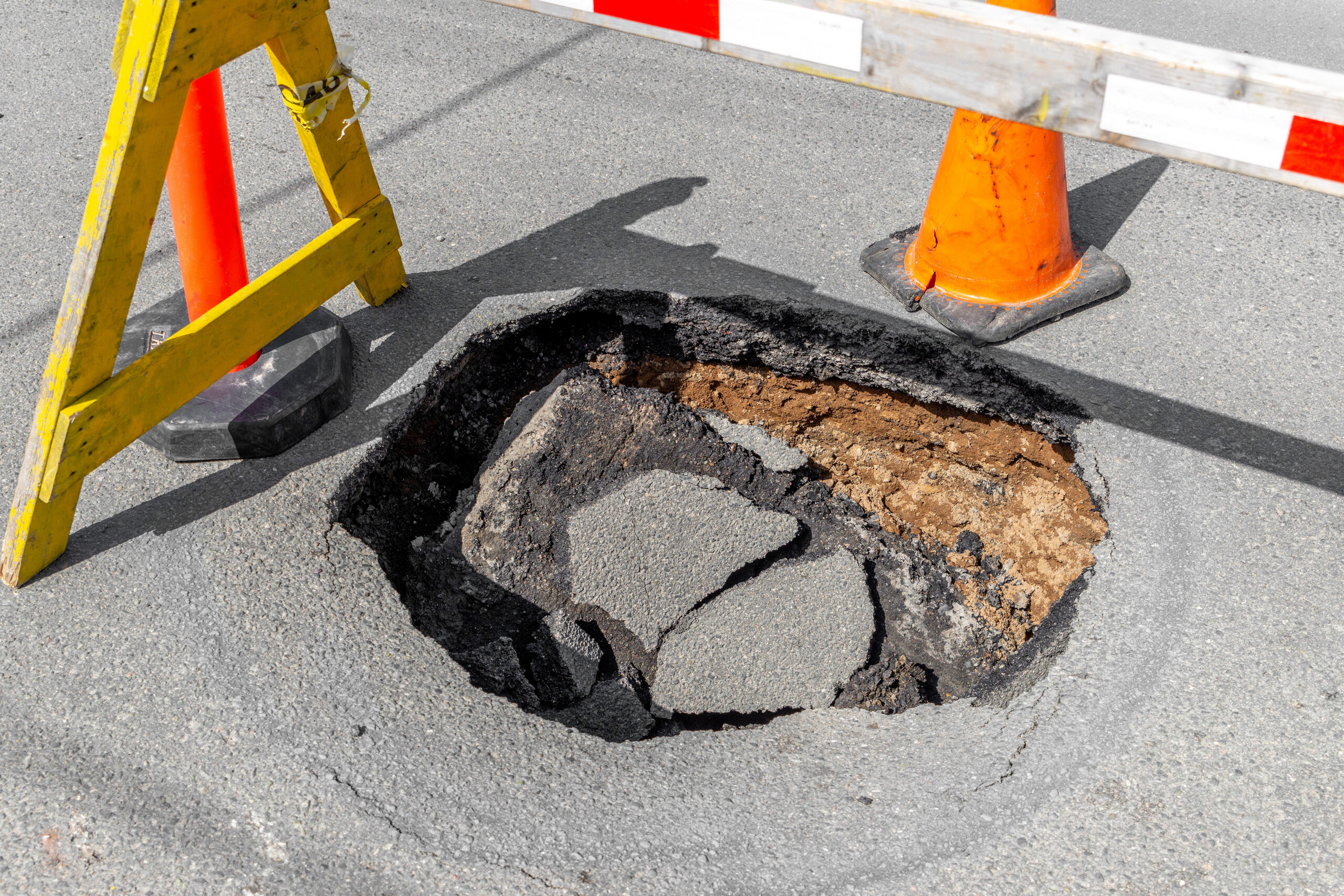
When a parking lot “sinks,” it’s usually because the foundation or subgrade beneath the concrete has weakened, shifted, or washed away, leaving the surface without proper support and eventually causing it to sink.
Sunken areas aren’t just an eyesore. They create safety and liability risks, from trip-and-fall hazards to ADA violations.
In this post, we’ll take a closer look at why parking lots sink and what you can do about it.
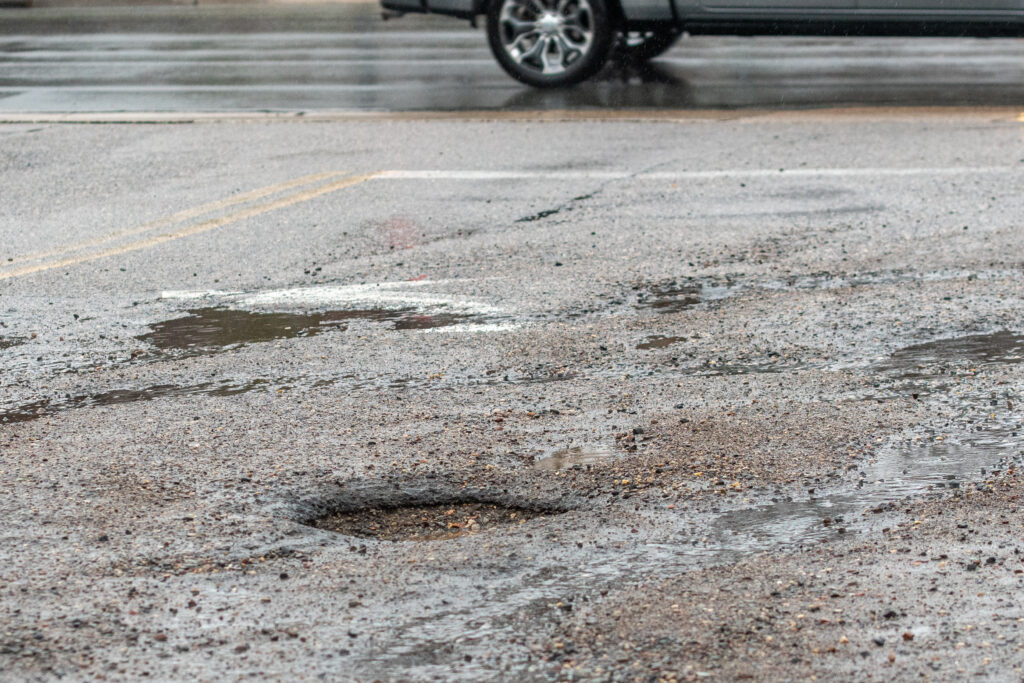
One of the most common culprits behind a sinking parking lot is poor drainage. Parking lots often sink when water washes away the supporting soil (subgrade) beneath the concrete, weakening the support structure. Poor drainage (along with Michigan’s freeze-thaw cycles) accelerates this process.
Concrete is porous, so when water doesn’t drain properly from its surface, it seeps through cracks and holes, washing away or weakening the subgrade. Over time, vehicle traffic will compress the weakened ground, causing dips and depressions.
The good news is that poor drainage is relatively easy to fix. If you notice a drainage problem, clean catch basins, inspect and flush underground pipes, and schedule a professional to inspect your existing drainage systems.
When crews perform utility work, they dig trenches to reach the pipes and cables they need to service. As a result, they disrupt the ground’s natural structure. If crews don’t pack loose soil back down properly during backfilling, it will settle over time under vehicle weight and other environmental pressures.
Be sure to work with quality contractors for any utility work. Contractors should add soil back into trenches in thin layers and compact each layer individually. Dumping soil all at once will compact only the top, leaving the bottom loose. Contractors should also understand the soil they’re working with because different types require different compaction tools.
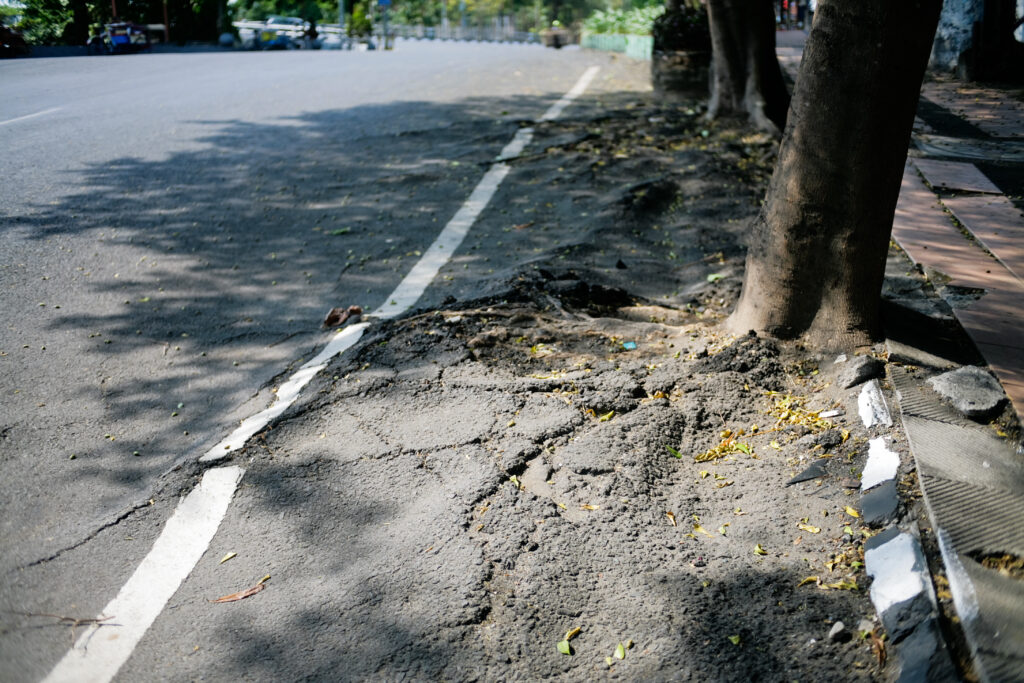
Trees can damage parking lots in several ways. As trees grow, their roots can grow outward under your parking lot as they search for moisture and oxygen. As roots thicken, they can push up against the parking lot surface, and as they move, they will displace dirt, weaken your parking lot’s foundation, and cause low spots.
If you have trees growing near your parking lot, install a root barrier between the tree and the lot to force roots to grow downward rather than outward.
Overload damage usually results from poor soil compaction, soil erosion, or drainage issues rather than problems with the initial concrete installation. Although parking lots are designed to support the weight of cars and trucks, cracks and collapses can occur in certain areas if the subgrade has been damaged or weakened.
Michigan’s climate is particularly tough on roads and paved surfaces, largely because of our harsh winters and freeze-thaw cycles.
When it rains or snows, water enters cracks or holes in the pavement and can even soak into the subgrade. When this water freezes, it expands by up to 10%, pushing the pavement upward and widening cracks. Eventually, the water thaws and the soil settles back down, but often leaves a pocket of space. Over time, the pavement over this void weakens as vehicles drive over it, causing it to shatter and cave in.
Your two main options for sunken areas are repairing with concrete leveling or completely replacing your slab.
We recommend concrete leveling for slabs that have dropped a few inches. Lifting costs about a third of a replacement and will result in very little downtime for your business.
If damage is more widespread, especially if the sinking is accompanied by significant spalling (when the concrete crumbles), a replacement might be the more cost-effective option in the long run. That is why it’s best to address concrete problems as early as possible. You don’t want it to get to the point where a replacement is the only option because the process comes with high upfront costs and a longer timeframe.
Have you noticed sinking areas? Address them now rather than later.
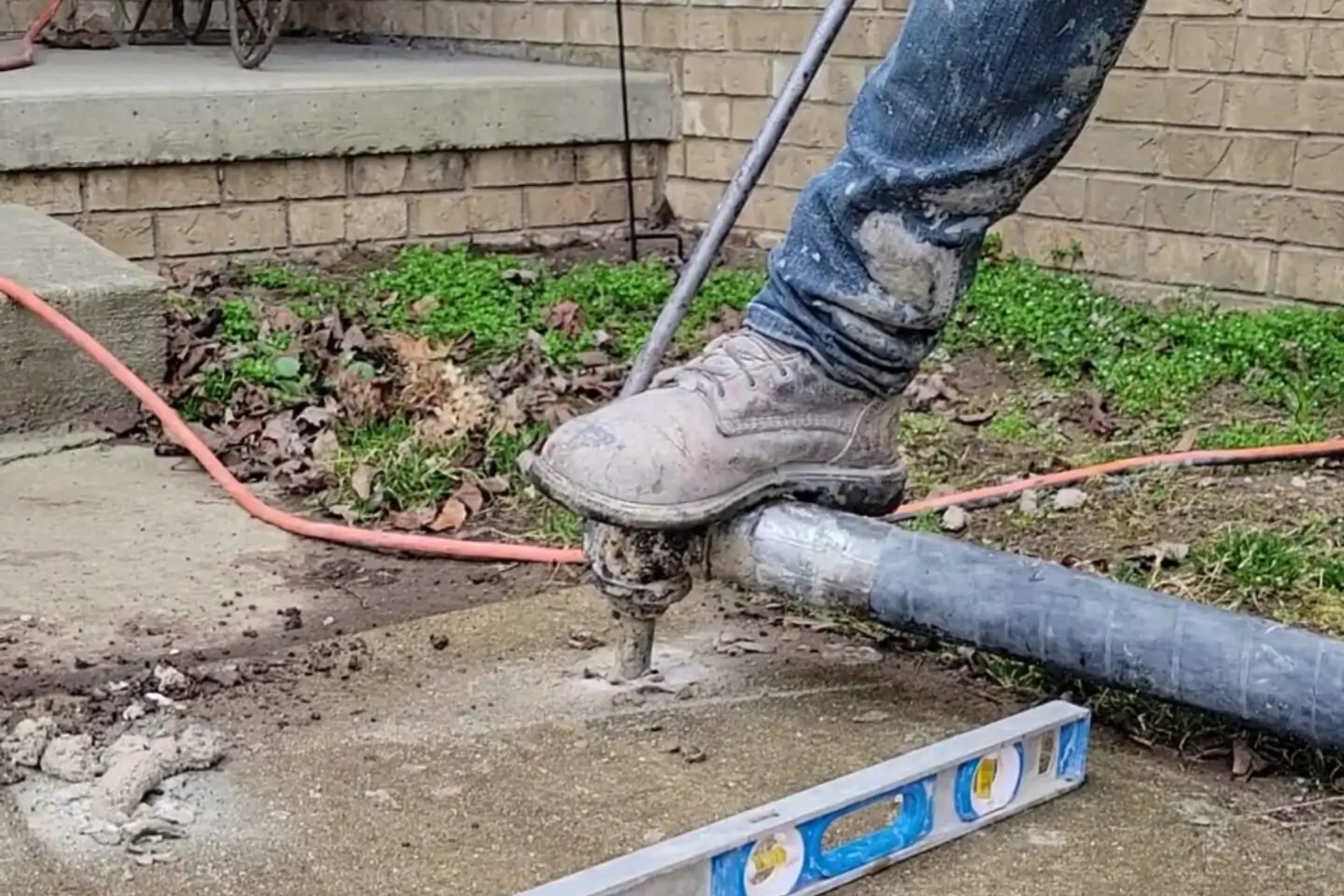
Detroit Concrete Leveling offers polyjacking and limestone leveling services to businesses throughout the Southeast Michigan/metro Detroit area. Our team can provide cost-effective solutions for leveling parking lots, warehouse floors, sidewalks and walkways, steps, roads, and other concrete structures.
If you’re not sure whether your concrete can be fixed with leveling or requires a full replacement, contact us today to schedule a free inspection.
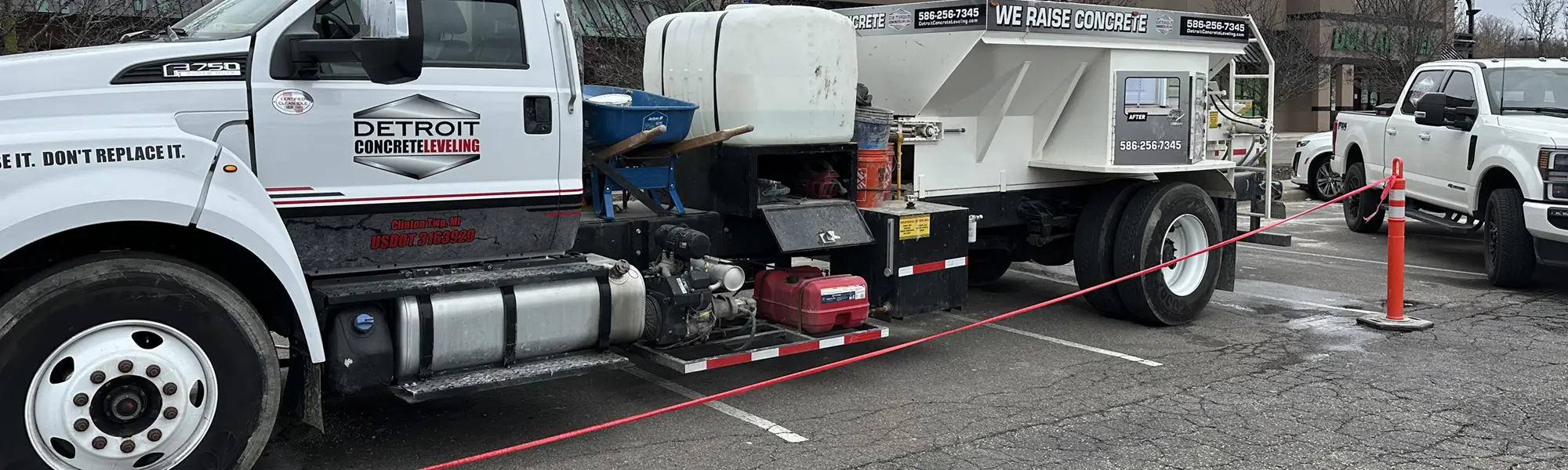
Get the quality you deserve from Detroit Concrete Leveling. If you’re ready to start your project, contact us today for a free, no-obligation quote.